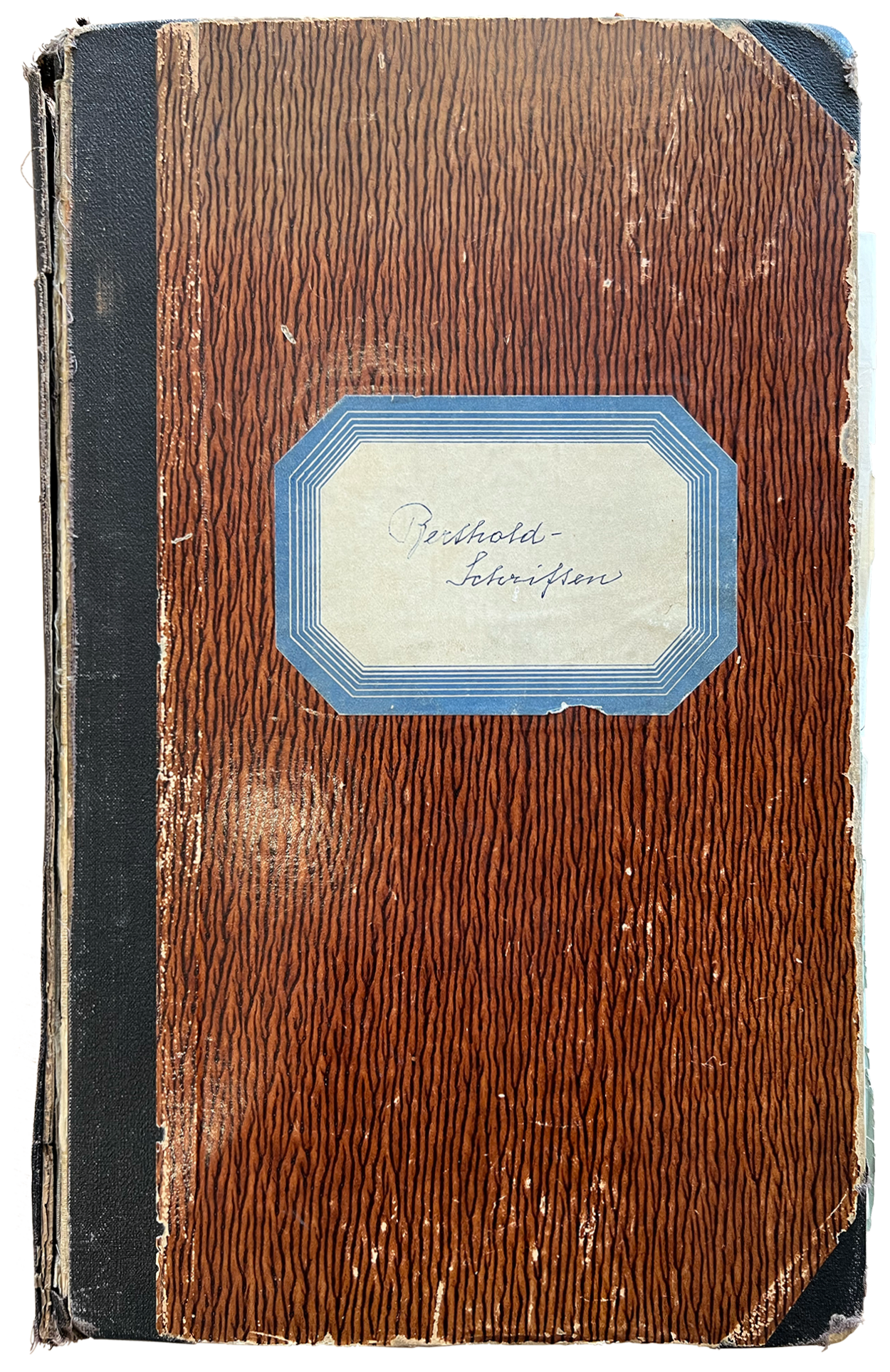
Category: Research
-
Bauer’s view of Berthold up until about 1927
Welcome to the seventh post from my Friedrich Bauer Project. Below is my translation of his entry for Berthold as it appears on pages 24–31 of his Chronik der Schriftgießereien in Deutschland und den deutschsprachigen Nachbarländern (1918). I added illustrations and captions to the text, plus some commentary in this post’s footnotes. Berthold 1858 On…
Written by

-
Berlin foundries, part 3
As I have translated Friedrich Bauer’s accounts of the histories of Berlin-based typefoundries, I have been adding too much commentary. That is quite visible in my previous two entries. At this pace, who knows when I will have gotten through the entire book! To speed the project along somewhat, I have compiled my translations of…
Written by

-
Unger versus Decker
For decades after the 1760s, the in-house typefoundry within the Decker printing house was the most significant foundry in Berlin. Arguably, it was only surpassed after Eduard Haenel moved his Magdeburg-based foundry to Berlin in the late 1830s. Despite Decker’s long prominence, it never developed a typeface as influential in German typography as the Unger-Fraktur,…
Written by

-
Thurneysser and the later privatization of Berlin’s first state-owned typefoundry
Welcome to part one of what will surely be a long, multi-part series on the typefoundries active in Berlin between 1574 and about 1927. In turn, this is part of my Friedrich Bauer project, in which I slowly translate and comment on the text from Bauer’s 1928 Chronik der Schriftgießereien in Deutschland und den deutschsprachigen…
Written by

-
The Haas Type Foundry up until about 1927
Friedrich Bauer did not include Basel typefoundries in his 1914 book, Chronik der deutschen Schriftgießereien. Yet, in its second edition, he expanded the focus to include areas outside of Germany where German was spoken, including Basel. That update was published four years after Gustav Mori’s 1924 history of typefounding in Southern Germany and its neighboring territories.[1]…
Written by

-
Hand drawings for Berthold’s phototypesetting library
Most of the Deutsches Technikmuseum’s collections are not on public display, including the original hand-made drawings for Berthold’s phototypesetting faces. The storage for Berthold’s Diatronic typefaces alone fills 32 metal cabinets that together take up 19 meters of storage space. Bundled into 2,179 red-colored cassettes are approximately 270,000 drawings. Aside from a single cassette on…
Written by

-
Augsburg typefoundries
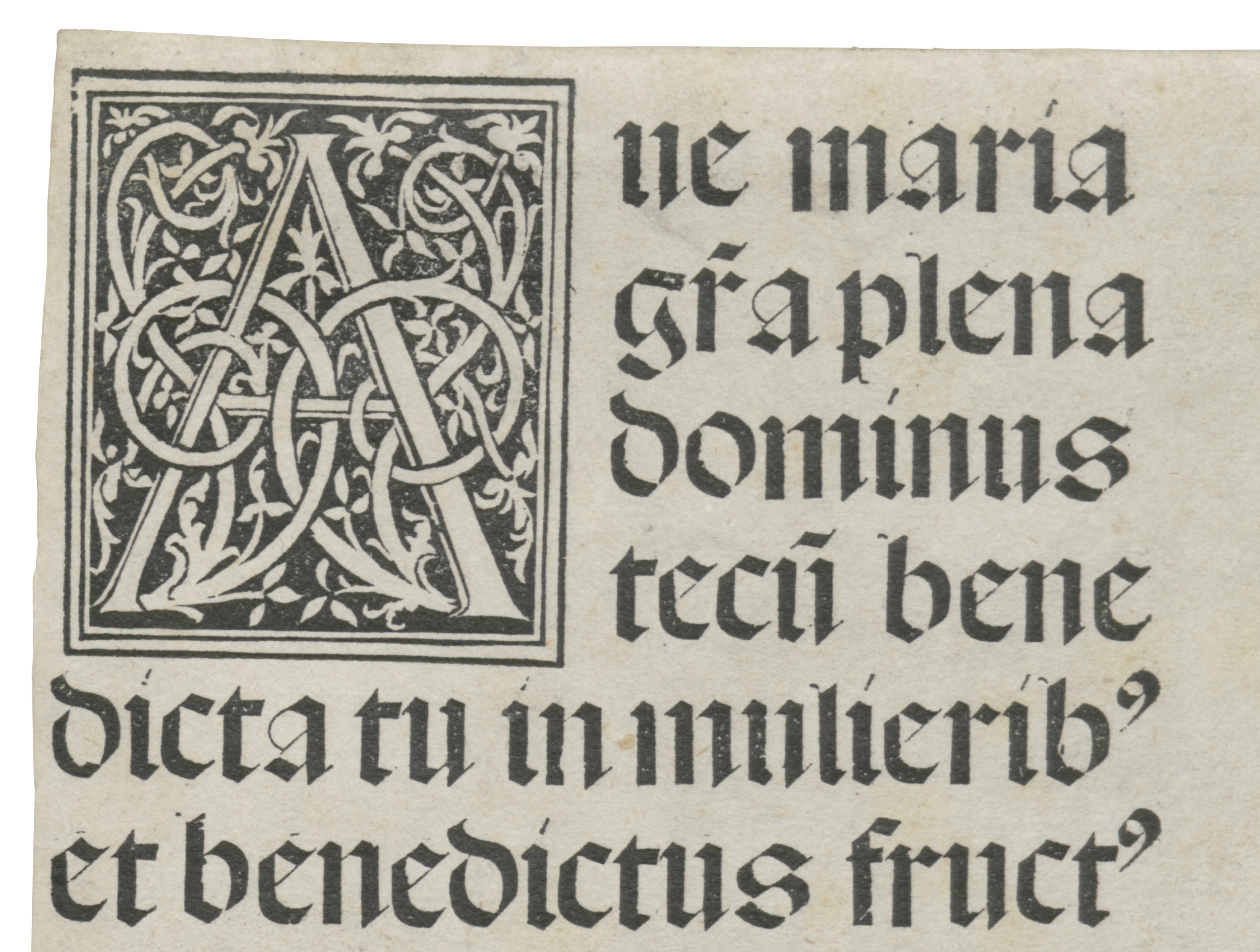
Augsburg was never a major typefounding center. However, the city was one of the earliest locations for printing in Western Europe. Augsburg was a Roman foundation – a military encampment was established about 15 years before the Common Era – named after Caesar Augustus. About a millennium and a half later, the city was the…
Written by
-
J. D. Trennert & Sohn
This in the inaugural post for my Friedrich Bauer Project, a new series translating Friedrich Bauer’s Chronik der Schriftgießereien in Deutschland und den deutschsprachigen Nachbarländern into English, foundry by foundry. The book, a chronicle of typefoundries in Germany and neighboring German-speaking countries, was originally published in 1928. A project-landing page provides more explanation for the…
Written by

-
Notes on the origin of Akzidenz-Grotesk
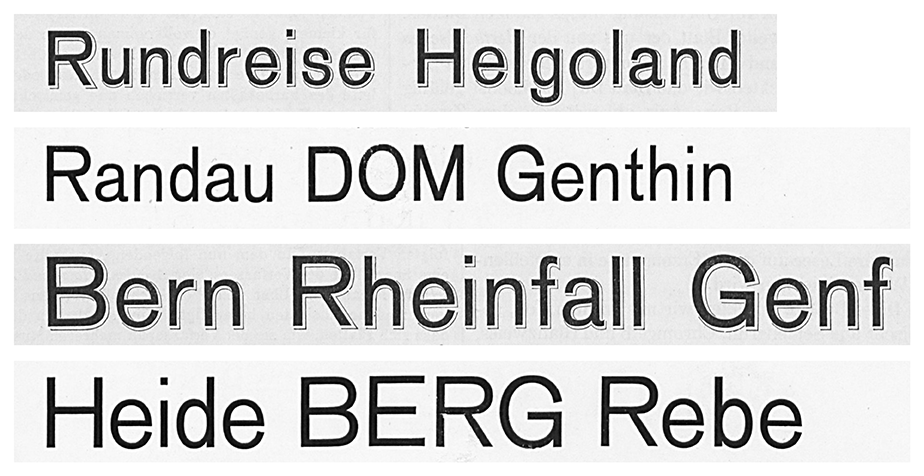
Above, I’ve reproduced my comparison of Bauer & Co.’s 1895 Schattierte Grotesk with Bauer & Co. and H. Berthold AG’s 1898 Accidenz-Grotesk. The image shows both typefaces in their 36 and 48-pt sizes. I took this Schattierte Grotesk specimen is from columns 407–8 of the 1896 Archiv für Buchdruckerkunst und verwandte Geschäftszweige issues. The lines of Accidenz-Grotesk are from Bauer & Co. and Berthold’s…
Written by
-
Fette Fraktur questions
Typeface names in the nineteenth century tended to be descriptive terms rather than brands. That was much less the case in the twentieth century, and today many typefaces are used whose nineteenth-century descriptive names have become brands. I’ve written several posts about Akzidenz-Grotesk, a classic example of this phenomenon. Another example is the Fette Fraktur…
Written by

-
Depesi Types
This post is about a somewhat mysterious German poster-type product. I recently acquired a specimen brochure entitled Depesi Plakat-Schriften, Caractères-Depesi, Depesi-Types. It is 24 pages long and has no publisher’s information or date of printing. A folded-up sheet measuring 53.5 × 31-5 cm is placed inside. All the interior pages are reproduced below, but photos of the entire specimen are…
Written by

-
Sandcasting brass types for bookbinders
The above photograph reproduces a drawer of brass bookbinders’ type from Dornemann & Co. in Magdeburg. The original packaging is also inside the cabinet, and the label tells us that this is Dornemann & Co.’s font number 11348. That’s the 36p size of Friedrich Wilhelm Kleukens’s Halbfette Kleukens-Antiqua. The Bauersche Gießerei originally published that as…
Written by

-
Berthold steel types from Dornemann & Co.
I dedicated a previous post to Berthold-Schriften, a notebook in the Deutsches Technikmuseum’s Historical Archive. That was an internal document from H. Berthold AG in Berlin tracking the company fonts’ sources from around 1900 until the early 1950s. The notebook indicates that Berthold contracted other type-making companies to produce the master patterns for its non-foundry-type fonts.…
Written by
-
Berthold’s patented type designs, 1900–1907 and 1921–1931
In June, on my way to the Historical Archive at the Deutsches Technikmuseum in Berlin, an art historian sent me a message about a handwritten notebook that might have some information about Berthold’s patented type designs. After consulting it, I found that it did include details for many of the company’s design-patent registrations and several…
Written by