Category: Hamburg typefoundries
-
J. D. Trennert & Sohn
This in the inaugural post for my Friedrich Bauer Project, a new series translating Friedrich Bauer’s Chronik der Schriftgießereien in Deutschland und den deutschsprachigen Nachbarländern into English, foundry by foundry. The book, a chronicle of typefoundries in Germany and neighboring German-speaking countries, was originally published in 1928. A project-landing page provides more explanation for the…
Written by

-
Research results: Sans serif type in nineteenth-century Germany
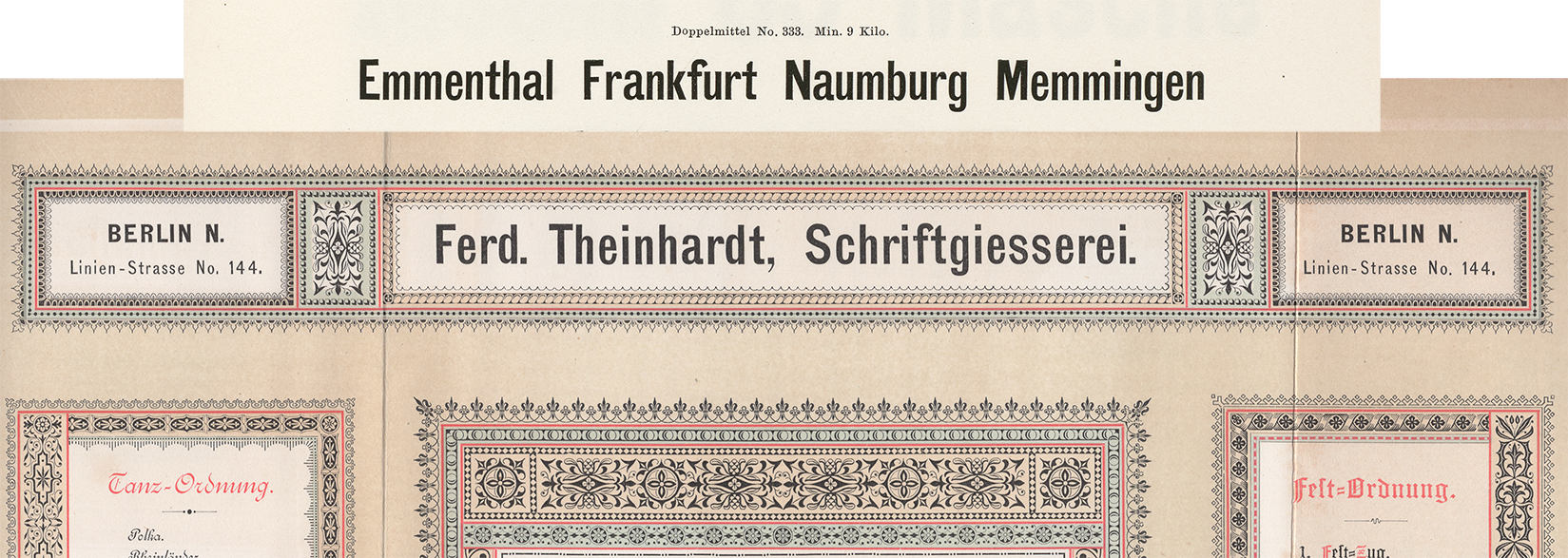
Berthold, Decker, Hamburg typefoundries, Leipzig typefoundries, Nineteenth-century sans serifs, Reichsdruckerei, Research, TheinhardtAbove, a digital collage showing two castings of the same design. The very top reproduces Benjamin Krebs Nachfolger’s product number 333, the 28pt size of the foundry’s Moderne Steinschriften typeface. Krebs first advertised its Moderne Steinschriften in 1865. That was one of the nine or more original sans serifs the Krebs foundry produced before 1900.…
Written by
-
Lapidar, from Genzsch & Heyse (born 1874)
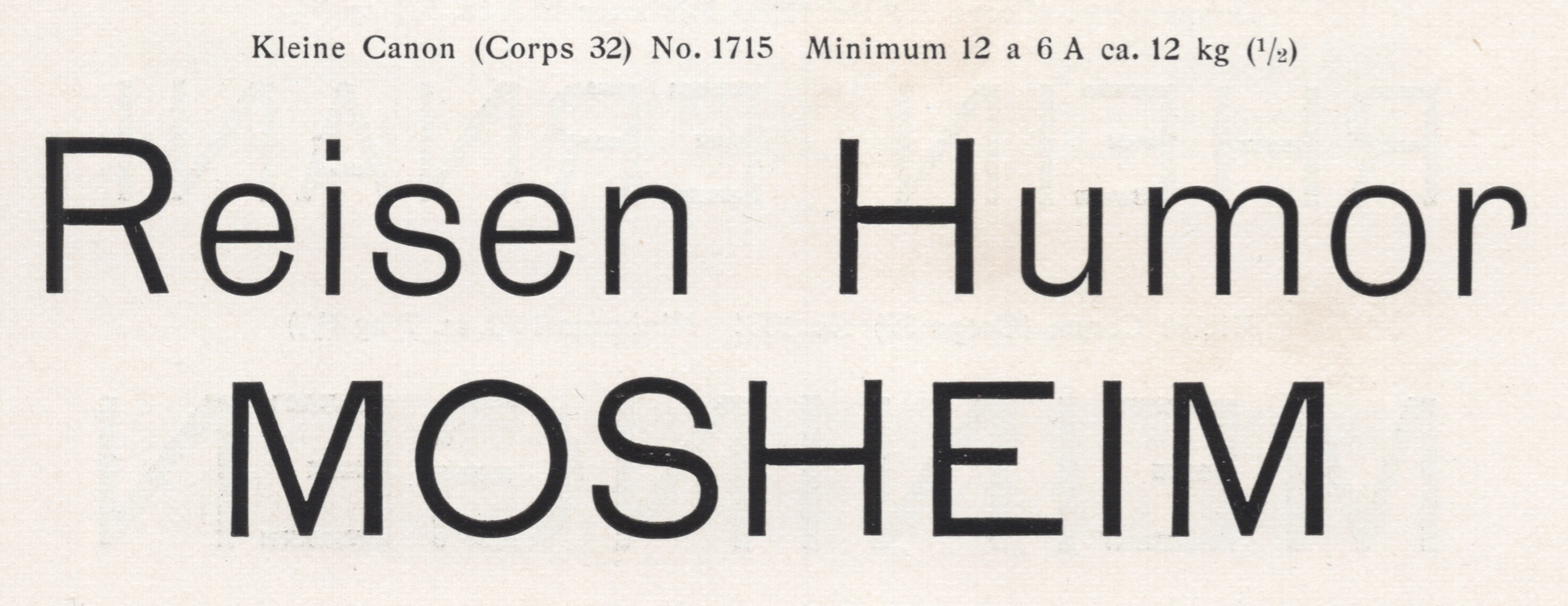
Above, I have reproduced a two-line specimen showing the largest size of the Lapidar-Schriften from a scan of E.J. Genzsch GmbH’s 1902 catalog. Recently, a type designer wrote to ask if I could provide him with some information about Genzsch & Heyse’s Lapidar. There is not much about the Lapidar typeface to be found online; Fonts…
Written by
-
Genzsch & Heyse employees in 1907
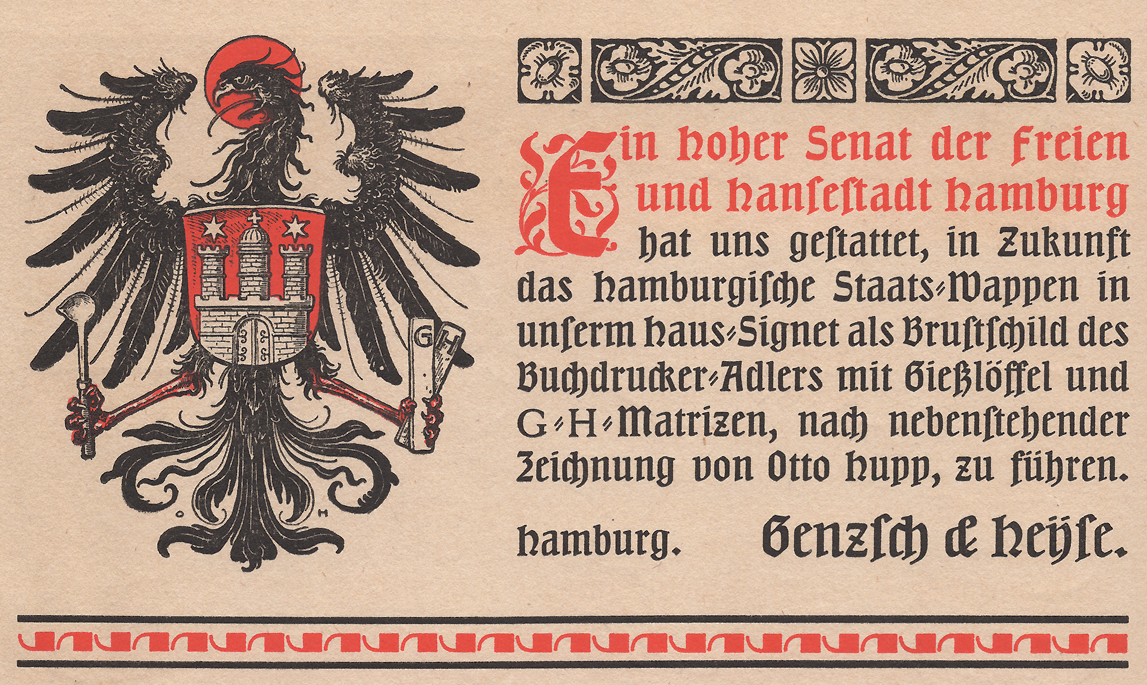
Above: For Genzsch & Heyse’s 70th anniversary in 1903, the Hamburg Senate allowed the foundry to incorporate the city’s coat-of-arms into their signet. Scan of part of page 2 from the Hamburger Kalender für das Buchgewerbe 1904. Preface In the type community today, we take certain things for granted, including the ready-availability of knowledge and…
Written by
-
Genzsch & Heyse employees in 1883
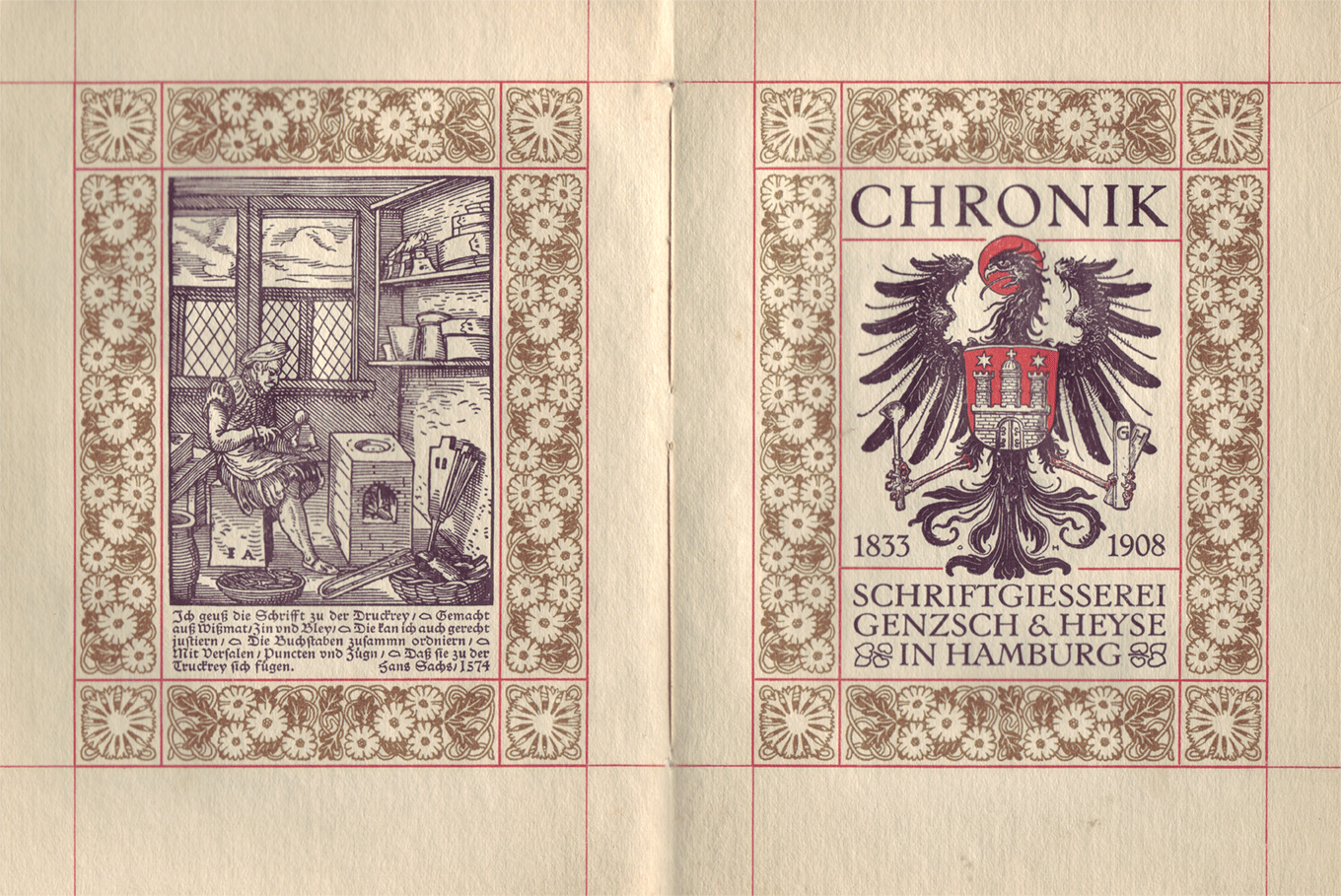
The list in this post is taken from a chronicle Genzsch & Heyse published to celebrate its 75th anniversary in 1908. The image above, of that book’s title spread, is taken from the Freunde des Klingspor Museums website. When researching the history of typefoundries, many sources have not survived. Rosters of company employees are one…
Written by